DCW DAILY BRIEF-Global Digital Assets, ScienceTech & Web3 Market Intelligence

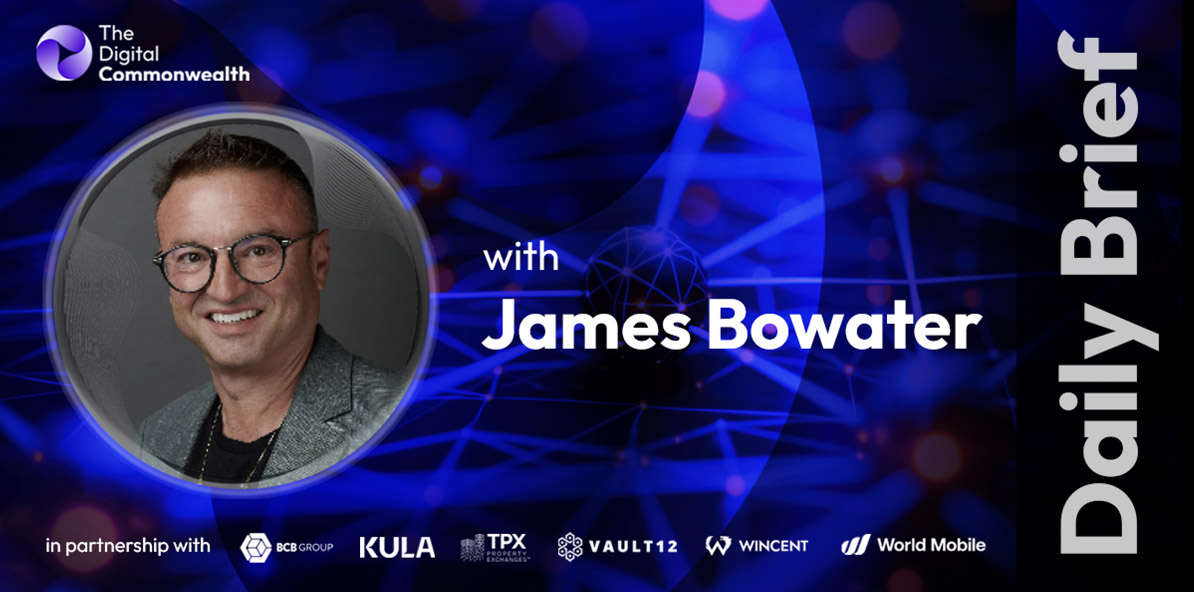
DCW DAILY BRIEF
Global Digital Assets, ScienceTech & Web3 Market Intelligence
Date: March 9th, 2026 │ Monday Edition #409
In partnership with BCB Group | Kula | TPX property Exchanges | Vault12 | Wincent | World Mobile
James Bowater
linkedin.com/in/james-bowater-b47612 | Twitter/X: X.com@TheDCW_JB
https://www.thedigitalcommonwealth.com/

Next Event: https://www.thedigitalcommonwealth.com/
📊 EXECUTIVE SUMMARY
Global markets opened Monday, March 9th, 2026, under the heaviest selling pressure of the nine-day Iran conflict as the war escalated sharply overnight on multiple fronts. The US-Israel military campaign entered Day 9 with American and Israeli forces striking Iranian oil storage depots and refining facilities for the first time, including a major fire at the Shahran fuel depot on the outskirts of Tehran. Iran's Assembly of Experts signalled a decision on a successor to the slain Supreme Leader Ali Khamenei was imminent, with Mojtaba Khamenei the supreme leader's son named as successor, a dynastic succession that raises questions about regime legitimacy and internal cohesion. A US National Intelligence Council report, described by the Washington Post, assessed that a large-scale US-led assault was unlikely to topple the Iranian government, and that Iran's fragmented opposition taking control was equally unlikely the most significant single geopolitical intelligence statement of the conflict. Trump continued to demand "unconditional surrender" from Iran, stating the war would continue for "a little while" but that Washington was not seeking to settle with Tehran.
Asian equity markets absorbed a severe second wave of selling. South Korea's KOSPI triggered its second circuit breaker in four sessions, plunging over 8% before closing -5.96% at 5,251.87; Samsung Electronics fell 7.81% and SK Hynix dropped 9.52% on fears of semiconductor materials shortages and energy cost spirals. Japan's Nikkei 225 tumbled ~5.46% to ~52,586, breaking below 53,000 for the first time since January, with SoftBank Group (-9.81%), Advantest (-10.5%), and Lasertec (-11.2%) leading losses. Taiwan's TAIEX fell 4.86%, Hong Kong's Hang Seng declined 1.8%, and India's Nifty 50 lost 2.5%. US markets closed Friday with fresh losses the week's worst session since the war began: S&P 500 -0.94% at 6,816.63, Dow -403.51 pts (-0.83%) at 48,501.27, Nasdaq -1.02% at 22,516.69 after February Non-Farm Payrolls delivered a devastating miss: -92,000 jobs (consensus: +55,000), the worst print in four months, with unemployment rising to 4.4% and December revised to -17,000. S&P 500 futures point to a ~2% decline at Monday's open as Dow futures sink over 800 points (-1.75%).
Oil surged to its highest levels in years. Brent crude spiked above $107–$115/bbl in Monday's Asian session, with WTI briefly surpassing $110–$115/bbl, representing Brent's biggest single-week gain since the COVID-19 pandemic (~27%). Saudi Arabia's offer of approximately 4.6 million barrels via the Yanbu pipeline provided temporary relief, easing Brent to ~$107.71 and WTI to ~$103.47, but prices remain firmly above $100. The Goldman Sachs $130/bbl tail-risk scenario is now within range. Gold surged to ~$5,400/oz (+~2.5%) in Monday's Asian session, its seventh consecutive month of gains and its longest such streak since 1973, with silver touching ~$96.93/oz (+~2%) as the precious metals complex validates its safe-haven credentials against the dual shock of war and economic deterioration.
Bitcoin fell ~2% to ~$66,939–$67,501 in Monday's trading, briefly touching below $66,000 at session lows, as risk-off dynamics dominated and the February NFP shock reinforced stagflation fears. The total crypto market cap holds at ~$2.42 trillion with BTC dominance at ~56.6%. The Fear & Greed Index remains in Fear territory at ~14–22 extending its sub-25 streak beyond 38 consecutive days. Despite the price pressure, spot Bitcoin ETFs recorded $1.7 billion in net inflows last week, the highest weekly institutional accumulation figure since early March, confirming the institutional accumulation-versus-retail-panic divergence is widening. ETH traded at ~$1,932–$1,985, XRP at ~$1.34, SOL at ~$81.51–$83.23, ADA at ~$0.27, DOGE at ~$0.08–$0.09.
The dominant Monday narrative centres on four intersecting themes: (1) Iran War Day 9 escalation: strikes on Tehran oil infrastructure, Iranian leadership succession, and the NIC's sobering assessment that regime change is unlikely, materially extending the probable conflict duration; (2) Stagflation crystallising: the collision of a -92K NFP with $107+ Brent crude is the worst-case macro combination employment destruction and inflation simultaneously that the Federal Reserve has no clean policy response to; (3) NVIDIA GTC 2026 (March 16–19, San Jose): Jensen Huang's keynote on the 'Five Layers of AI' is the week's primary forward-looking catalyst, with NVDA down ~5% YTD and the event positioned as the inflection point for AI infrastructure spending confirmation; and (4) Bank of Canada Project Samara: Canada's first tokenised bond on DLT infrastructure, with EDC, RBC and TD Bank, represents the most significant central bank-adjacent DLT milestone of 2026 and directly validates DCW's tokenisation thesis.
Iran War Day 9: US-Israel strike Tehran oil depot (Shahran) and refining facilities for first time; Mojtaba Khamenei named as Supreme Leader successor; NIC report says regime change 'unlikely'. KOSPI circuit breaker triggered for second time in four sessions: -5.96% to 5,251.87; Samsung -7.81%, SK Hynix -9.52%. Nikkei -5.46% to ~52,586; TAIEX -4.86%; Hang Seng -1.8%; S&P 500 futures ~-2%; Dow futures -800+ pts (-1.75%).
US Friday close: S&P 500 -0.94% at 6,816.63; Dow -403 pts at 48,501.27; Nasdaq -1.02% at 22,516.69. February NFP: -92,000 (consensus: +55,000) worst in four months; unemployment 4.4%; stagflation fears intensify. Brent crude ~$107–$115/bbl (biggest weekly gain since COVID, +27%); WTI ~$103–$110/bbl; Saudi Arabia offers 4.6M barrels (temporary relief). Gold surges to ~$5,400/oz (+2.5%) Monday Asian session seventh consecutive month of gains.
Bitcoin ~$66,939–$67,501 (-~2%); briefly below $66,000; ETH ~$1,932–$1,985; XRP ~$1.34; SOL ~$81.51–$83.23; ADA ~$0.27; DOGE ~$0.08–$0.09. Total crypto market cap ~$2.42T; BTC dominance ~56.6%; Fear & Greed Index ~14–22 (Fear, 38+ consecutive days below 25). Spot BTC ETF weekly inflows $1.7B institutional accumulation diverges sharply from retail panic.
NVIDIA GTC 2026 (March 16–19): Jensen Huang keynote on 'Five Layers of AI' key upcoming catalyst. Bank of Canada Project Samara: first DLT-based tokenised bond (EDC, RBC, TD Bank). US lawmakers push CBDC ban until 2030. Lloyds Bank 'Technology Strategy 3.0': 35% IT cost reduction, customer data monetisation. Week ahead: FOMC March 18th; CPI March 11th; US 10-year yield back above 4%.
📰 TODAY'S HEADLINES
💹 MARKETS
- KOSPI triggers its second circuit breaker in four trading sessions, closing -5.96% at 5,251.87, as oil prices neared $120/bbl for the first time since 2022; trading was suspended for 20 minutes from 10:31 a.m. local time after the index plunged over 8%; Samsung Electronics fell 7.81% and SK Hynix shed 9.52% amid fears that semiconductor production materials including helium sourced from the Middle East could be disrupted; South Korean ruling party lawmaker Kim Yong-bae told Reuters the chip industry is acutely concerned about energy cost spirals; Goldman Sachs analysts noted the KOSPI has fallen over 16% since the conflict began on February 28th but urged investors to view this in the context of a 176% gain since April 2025
- Japan's Nikkei 225 tumbled ~5.46% to ~52,586, breaking below 53,000 for the first time since January; SoftBank Group (-9.81%), Advantest (-10.5%), Lasertec (-11.2%), Fujikura (-10%), and Kioxia Holdings (-10.5%) led losses; Japan relies on the Middle East for approximately 95% of its oil supplies with ~70% transiting the Strait of Hormuz, making the economy acutely vulnerable; the Japanese government is now considering tapping national oil reserves; the Topix index fell over 5%
- US equity markets closed Friday with broad losses: S&P 500 -0.94% at 6,816.63, Dow -403.51 pts (-0.83%) at 48,501.27, Nasdaq -1.02% at 22,516.69; all three major averages posted weekly losses and moved negative for 2026 year-to-date as the February NFP shock and oil surge above $90/bbl combined to fan stagflation fears; S&P 500 futures point to a ~2% decline at Monday's open; Dow futures were down over 800 points (-1.75%) as of early morning ET; 10-year Treasury yields climbed back above 4% on the week the biggest weekly jump since April 2025's tariff shock
- Brent crude surged above $107–$115/bbl and WTI above $103–$110/bbl in Monday's Asian session, the biggest single-week move for oil since the COVID-19 pandemic (+27% on the week); Saudi Arabia's offer of approximately 4.6 million barrels of crude via the Yanbu pipeline temporarily eased Brent to ~$107.71/bbl and WTI to ~$103.47/bbl, but oil remains firmly above $100; the Goldman Sachs $100/bbl scenario is now past, with the $130/bbl tail-risk scenario moving into realistic range; US crude briefly surpassed $115/bbl in early trading; US regular gasoline averaged $3.25/gallon nationally (week-on-week jump of ~27 cents, the largest since the onset of Russia's invasion of Ukraine in 2022)
- Gold surged to ~$5,400/oz (+~2.5%) in Monday's Asian session its seventh consecutive month of gains, the longest winning streak since 1973; silver touched ~$96.93/oz (+~2%); the precious metals complex is demonstrating classic safe-haven dynamics as equities and oil diverge, with gold benefiting simultaneously from war risk premium, dollar strength offset by the NFP shock, and structural central bank purchase flows; analysts at City Index and Forex.com see $5,500–$5,600 as realistic near-term targets if tensions persist
- Bitcoin declined ~2% to ~$66,939–$67,501, briefly touching below $66,000 at session lows as risk-off sentiment dominated Monday's open; the Fear & Greed Index sits at ~14–22 (Fear territory) extending its sub-25 streak beyond 38 consecutive days; the $65,000 zone remains the structural support floor confirmed through the prior week's selling; the broader crypto market cap holds at ~$2.42 trillion with BTC dominance at ~56.6%
🏢 Institutional & Corporate
- Bank of Canada Project Samara completes its landmark DLT-based bond issuance milestone: Export Development Canada (EDC) issued Canada's first tokenised bond on the Samara platform this week, with RBC and TD Bank as participants; the bond was sold, traded, and will be managed through its full life cycle including cash and bond issuance, bidding, coupon payment, redemption, and secondary trading on distributed ledger technology infrastructure settled in wholesale central bank deposits; the milestone represents the most significant central bank-adjacent DLT validation in G7 markets in 2026 and directly substantiates the tokenisation narrative underpinning DCW's Digital Commonwealth thesis
- Spot Bitcoin ETFs recorded $1.7 billion in net inflows last week the highest weekly institutional accumulation figure of the conflict period while the Fear & Greed Index simultaneously collapsed from 22 to 14, creating the starkest divergence between institutional behaviour and retail sentiment seen in the current cycle; BlackRock IBIT, Fidelity FBTC, and Bitwise BITB led inflows; the exchange whale ratio surged to 0.85 (highest since October 2015), with large investors accounting for 85% of total exchange deposits a structural accumulation signal historically associated with medium-term price inflections
- BlackRock blocked investors from withdrawing $1.2B from its private credit funds, triggering a liquidity-contagion fear event for crypto markets; BlackRock shares fell 7.69% the largest single-day drop of the current cycle sparking concern that pressure on its traditional business could force the asset manager to consider ETF liquidations to raise cash; the episode highlights the interconnected risks between traditional finance stress and institutional crypto infrastructure; BlackRock denied any intention to reduce its IBIT exposure
- Lloyds Bank's 'Technology Strategy 3.0' emerges in internal documents (reported by the Financial Times): COO Ron van Kemenade stated Lloyds aims to become 'the UK's biggest fintech' by slashing hundreds of millions in IT costs by 2028 through a 35% technology cost reduction; the plan developed by CTO Vic Weigler includes anonymising and monetising customer data through third-party sales, automating compliance in real-time, scrapping 862 internal apps, closing 15 data centres, and shifting to cloud infrastructure; Lloyds was separately criticised last month for using anonymised employee bank data during pay negotiations; the strategy raises significant data protection and Consumer Duty compliance questions
⚖️ Regulatory & Policy
- US lawmakers push to ban a Federal Reserve central bank digital currency (CBDC) until 2030, with a group of congressmembers urging legislative leaders to strengthen existing restrictions against a US digital dollar; the political momentum against a CBDC directly benefits private digital payment infrastructure including the XRP Ledger, stablecoin networks, and regulated crypto payment rails; the GENIUS Act's July 18th deadline continues to advance alongside these anti-CBDC signals, reinforcing stablecoins as the US digital payment policy direction of travel
- Eight pending US spot XRP ETF applications signal a looming institutional supply shock: analysts warned on March 8th that if approved, simultaneous institutional demand from multiple ETF structures could rapidly drain exchange supply, creating a price catalyst analogous to Bitcoin ETF approval dynamics; combined with the XRPL's 1,280%+ growth in real-world asset transfers in 30 days ($139.85M) and the RLUSD stablecoin's market cap surpassing $1B, XRP's institutional readiness narrative is strengthening
- Coinbase publicly criticises new IRS crypto tax reporting rules (March 7th), calling requirements to report countless small transactions including stablecoin trades and minimal gas fees as overly complex and burdensome for retail traders; the regulatory friction comes as on-chain volumes surge with geopolitical safe-haven demand; the episode highlights the tension between expanding crypto adoption and increasingly granular US tax enforcement, with potential implications for retail participation rates and exchange compliance costs
- Cardano founder Charles Hoskinson formally opposed the US CLARITY Act (H.R. 3633) in a live broadcast, calling the Digital Asset Market Clarity Act 'horrific' and arguing it gives the SEC excessive power, would classify new crypto projects as securities by default, and fails to protect DeFi and stablecoin infrastructure; his stance directly conflicts with Ripple CEO Brad Garlinghouse, who supports CLARITY for providing regulatory certainty; the internal crypto industry divide over CLARITY Act language reflects the bill's complexity and the divergent interests of different digital asset architectures
🤖 Technology & Innovation
- NVIDIA GTC 2026 (March 16–19, San Jose) positions as the week's primary forward-looking market catalyst: CEO Jensen Huang is expected to deliver a keynote centred on the 'Five Layers of AI' Energy, Chips, Infrastructure, Models, and Applications with details on the Vera Rubin architecture and Rubin Ultra successor roadmap; NVDA stock is down ~5% YTD and analysts broadly identify GTC 2026 as the event likely to reset the AI infrastructure spending narrative; average analyst price targets cluster at $255–$271; markets are treating GTC as the AI cycle's equivalent of Broadcom's $100B revenue forecast moment from the prior week
- LastPass phishing campaign targeting users with fake support emails began around March 1st and is continuing; the campaign identified by LastPass Threat Intelligence, Mitigation and Escalation (TIME) involves malicious actors impersonating LastPass support staff via fraudulent emails designed to extract sensitive credentials through social engineering and urgency; the attack highlights persistent credential security vulnerabilities in widely-used password management infrastructure; for DCW members and financial services firms, the episode underscores the need for multi-factor authentication and staff phishing awareness training
- On-chain crude oil trading volume surged 910% week-on-week as traders repositioned on DeFi-native commodity derivatives amid the Hormuz crisis; tokenised oil, tokenised gold (PAXG trading ~$5,600 on-chain, tracking spot gold's Monday surge), and energy-linked on-chain instruments are experiencing their highest trading volumes of 2026; the DePIN infrastructure resilience thesis continues accumulating empirical validation as centralised Gulf energy infrastructure fails simultaneously across multiple vectors QatarEnergy LNG, Saudi refinery operations, Iraqi Kurdish crude, and UAE industrial facilities
📈 Market Overview
🌐 TOTAL CRYPTO MARKET CAP: ~$2.42 TRILLION
24h Change: Down ~-1.0% │ Bitcoin Dominance: ~56.6%
₿ BITCOIN (BTC) Price: ~$66,939–$67,501 (down ~2% from Friday's close)
24h Volume: ~$19.5+ Billion │ Market Cap: ~$1.32 Trillion │ Dominance: ~56.6% │ 24h Range: ~$65,800–$68,500
Bitcoin is under pressure on Monday as the Iran war's ninth day delivers its most acute macro shock yet a combination of the first strikes on Tehran oil infrastructure, the February jobs disaster (-92,000), and global equity futures pointing to a ~2% opening decline. BTC briefly touched below $66,000 in early Asian trading before stabilising in the $66,939–$67,501 range. The $65,000 structural support floor confirmed through eight consecutive days of conflict-driven equity stress remains the critical defence level. The decisive institutional data point is the $1.7 billion in weekly spot ETF net inflows, which represents the strongest institutional accumulation week of the conflict period. This divergence smart money buying while retail sentiment sits at Fear (~14–22) is the defining structural feature of the current cycle, with whale cohorts accumulating without selling and long-term holder net selling remaining well below its February 5th peak. The Rainbow Chart remains in the Buy/Accumulate zone. The $70,000–$71,000 reclaim is the first key validation level for any sustained recovery; a re-test of the $63,000–$65,000 zone cannot be excluded if S&P 500 futures follow through on their ~2% gap-down signal.
Ξ ETHEREUM (ETH) Price: ~$1,932–$1,985 (down ~4–5% over 24 hours)
24h Volume: ~$15–$17 Billion │ Market Cap: ~$233–$240 Billion │ Record Staking: 37.1 Million ETH
Ethereum is trading at ~$1,932–$1,985, retesting the psychologically critical $2,000 level from below as risk-off sentiment dominates Monday's open. ETH has underperformed BTC in Monday's session, with BTC dominance rising to ~56.6% as capital concentrates in Bitcoin's relative safe-haven layer. The record 37.1 million ETH staking figure continues to provide structural supply tightening. The BlackRock ETHB staking ETF catalyst remains the dominant medium-term structural driver pending SEC review its April decision deadline is now the next major institutional catalyst for Ethereum. The Pectra upgrade's expansion of validator caps from 32 to 2,048 ETH has significantly lowered the institutional staking barrier.
🔷 XRP Price: ~$1.34 (down ~5% over 24 hours) │ 24h Volume: ~$2.8B │ Market Cap: ~$77B
XRP is declining with the broader market at ~$1.34, down approximately 5% from Friday's close. The structural catalysts remain intact: eight pending US spot ETF applications that could create a supply shock on approval; RLUSD stablecoin market cap above $1B; XRPL real-world asset transfers up 1,280% in 30 days to $139.85M; and the CBDC ban push by US lawmakers that structurally benefits private payment networks. The CLARITY Act dynamics are complicated by Hoskinson's vocal opposition, but Ripple's own support for the bill maintains XRP as the most likely primary beneficiary of legislative clarity. The $1.28–$1.30 structural support established through February's sell-off remains the critical floor.
◎ SOLANA (SOL) Price: ~$81.51–$83.23 (down ~7–8% over 24 hours) │ 24h Volume: ~$3.2B │ Market Cap: ~$46B
Solana is underperforming the broader market on Monday, declining ~7–8% to ~$81.51–$83.23 as the risk-off environment disproportionately pressures higher-beta Layer-1 assets. DeFi TVL remains above $8.1 billion with average daily DEX volume of $2.07 billion both demonstrating structural resilience despite the price weakness. The Alpenglow consensus upgrade (Votor, 100–150ms block finality) and Morgan Stanley's SOL ETF application under SEC review remain the dominant structural catalysts. SOL's deeply negative funding rate of -0.0111% reveals aggressive short positioning a setup that could trigger a violent short squeeze on any de-escalation signal or positive macro catalyst.
🔺 CARDANO (ADA) Price: ~$0.27 (down ~3–4% over 24 hours) │ 24h Volume: ~$430M │ Market Cap: ~$9.7B
Cardano is declining with the broader market at ~$0.27 as risk-off dynamics weigh on the altcoin complex. The Protocol Version 11 intra-era hard fork, improving Plutus performance and adding cryptographic builtins, remains pending. The Midnight privacy partner chain mainnet, Leios scaling implementation targeting ~1,000 TPS, and Tier-1 stablecoin integrations are the 2026 structural catalysts. Founder Hoskinson's public opposition to the CLARITY Act creates near-term political uncertainty for ADA's regulatory positioning but highlights the project's commitment to DeFi-native architecture. The $0.24–$0.25 zone is the structural support floor to monitor on any further risk-asset decompression.
💕 DOGECOIN (DOGE) Price: ~$0.08–$0.09 (down ~5–6% over 24 hours) │ 24h Volume: ~$1.2B │ Market Cap: ~$13B
Dogecoin is declining toward the $0.08 level on Monday, tracking the broader crypto market's risk-off move. DOGE is the highest-beta major in the current environment, moving in close proportion to BTC's directional momentum. The $0.10 psychological resistance level was never sustainably reclaimed during last week's partial recovery, and Monday's selling has pushed DOGE back toward the lower end of its recent range. Any de-escalation signal from Iran a ceasefire proposal, diplomatic back-channel confirmation, or Saudi mediation would provide the most significant tailwind for high-beta crypto recovery including DOGE. Retail engagement measured by trading volume at ~$1.2 billion remains elevated relative to pre-conflict norms.
📊 Market Sentiment Indicators
😨 Crypto Fear & Greed Index: ~14–22 range now @21 (Fear) ⚠️ Market sentiment on Monday, March 9th, 2026, remains anchored in Fear territory, extending its sub-25 streak to 38+ consecutive days one of the longest sustained fear episodes in recorded market history. The index reading of ~21 on Monday reflects the dual shock of the February NFP disaster and renewed oil price escalation above $100/bbl. However, the structural signal beneath the surface fear reading is the most constructive of the conflict period: $1.7 billion in weekly spot BTC ETF inflows represents institutional conviction at scale even as retail capitulation continues. The exchange whale ratio at 0.85 its highest since October 2015 confirms that large allocators are using fear as their primary entry mechanism. Bitcoin's $65,000 structural support floor has now held through eight consecutive days of acute macro stress, including the worst NFP print in four months and the first strikes on Tehran oil infrastructure. The KOSPI's second circuit-breaker event in four sessions historically marks a second acute-fear-peak episode a signal that mechanical forced-selling cascades are nearing exhaustion even as fundamental uncertainty remains elevated. The critical near-term binary: a ceasefire signal before FOMC (March 18th) would dramatically compress the fear premium; the absence of any diplomatic progress through next week maintains the current Extreme Fear risk floor.
🏛️ Traditional Markets Context
US equity futures are pointing to a sharp ~2% decline at Monday's open, with Dow futures down over 800 points (-1.75%), S&P 500 futures -1.5–2%, and Nasdaq-100 futures -1.6%, after Friday delivered the week's worst session S&P 500 -0.94% at 6,816.63, Dow -403.51 pts at 48,501.27, Nasdaq -1.02% at 22,516.69 as the February jobs disaster (-92,000 NFP, unemployment 4.4%) collided with oil surging above $90/bbl to crystallise stagflation as the dominant macro narrative. All three major averages posted weekly losses and are now negative year-to-date for 2026. The 10-year Treasury yield climbed back above 4%, registering its biggest weekly jump since the tariff shock of April 2025.
Asian markets have absorbed a second severe wave of selling. The KOSPI closed -5.96% at 5,251.87 after triggering its second circuit breaker in four sessions the index is down over 16% since the war began on February 28th, though Goldman Sachs contextualised this within a 176% gain since April 2025. Japan's Nikkei fell ~5.46% to ~52,586, its weakest levels in two months; Taiwan's TAIEX -4.86%; Hong Kong Hang Seng -1.8%; India's Nifty 50 -2.5%; China's SSE Composite -0.78% (the relative outperformer). Asia-Pacific markets moderated losses after Saudi Arabia's pipeline crude offer provided temporary oil price relief, but the structural demand-supply shock from Hormuz closure continues to dominate sentiment.
📦 Commodities
🥇 Gold: ~$5,400/oz (Surging to Record)
Surged +2.5% to ~$5,400 Monday Asian session seventh consecutive month of gains (longest streak since 1973); silver touched ~$96.93/oz (+2%); precious metals complex validating safe-haven status as equities and oil diverge; City Index targets $5,500–$5,600 near-term; PBoC purchases continuing; JP Morgan year-end target $6,300/oz intact; tokenised gold (PAXG) tracking ~$5,600 on-chain
⚪ Silver & Platinum: Surging
Silver at ~$96.93/oz (+2%) Monday standout performer in precious metals; silver's industrial demand exposure to energy infrastructure and semiconductor supply chains underpins its dual safe-haven and commodity demand narrative; platinum recovering from prior week's volatility; precious metals complex re-bidding on war-risk premium and dollar safe-haven demand
🛢️ Brent: ~$107–$115/bbl (Biggest Weekly Gain Since COVID)
Brent surged +27% on the week biggest gain since COVID pandemic; WTI ~$103–$110/bbl, briefly above $115; Saudi Arabia offered ~4.6M barrels via Yanbu pipeline, easing prices to ~$107.71 Brent/$103.47 WTI temporarily; Goldman Sachs $130/bbl tail-risk scenario now in realistic range; QatarEnergy LNG halted; Shahran oil depot in Tehran struck; Cape of Good Hope re-routing; US gasoline +27 cents/gallon weekly
📝 Market Narrative & Analysis
Monday, March 9th, 2026 marks the most complex macro moment of the nine-day Iran conflict: a triple-shock convergence of escalating war, collapsing employment data, and oil prices crossing the $100/bbl Rubicon simultaneously. The February NFP's -92,000 print the worst since October's DOGE-skewed readings was not merely a miss but a structural signal: the Iran energy shock is already transmitting into hiring freezes, transport disruptions, and energy-cost-driven manufacturing contractions at a speed that surprised even the most pessimistic consensus estimates. The unemployment rate at 4.4% and revisions to December (-65,000 to -17,000) and January (-4,000 to 126,000) paint a labour market that was already softening before the Gulf crisis arrived. The stagflation binary weak growth plus elevated inflation is now the Federal Reserve's explicit policy dilemma going into FOMC on March 18th.
Oil's move above $100/bbl is structurally different from any prior point in the conflict. The Goldman Sachs $130/bbl tail-risk scenario has moved from theoretical to realistic now that US-Israeli forces have directly struck Tehran oil infrastructure for the first time. The Shahran depot fire and targeted refinery strikes signal an escalation logic that could extend the disruption duration and intensify the supply shock. Saudi Arabia's pipeline crude offer a tactically significant move provided only temporary relief, confirming that market participants view the Hormuz closure as the primary constraint rather than producer-level output decisions. The Cape of Good Hope re-routing, adding 2+ weeks to delivery timelines, compounds physical supply stress beyond what financial hedging can offset.
The Iran leadership succession story is the geopolitical development with the longest-duration market implications. The naming of Mojtaba Khamenei son of the slain Supreme Leader as successor reflects a dynastic logic that raises profound legitimacy questions internally. The US National Intelligence Council's assessment that regime change is 'unlikely' and that Iran's opposition is too fragmented to govern is the single most significant intelligence signal of the conflict: it eliminates the 'swift regime transition' resolution scenario that markets had implicitly priced as the bull case for conflict duration. If regime change cannot happen through military pressure and internal opposition is too divided to take power, the only resolution pathways involve negotiated settlement which the Trump administration has publicly ruled out with its 'unconditional surrender' demand or a protracted, sustained conflict that could extend for months.
Bitcoin's position in this environment is analytically nuanced. The spot ETF inflow data ($1.7B weekly) is the strongest institutional conviction signal of the conflict period, dwarfing even Monday's $458M single-day inflow from earlier in the week. Yet price action has failed to reflect this accumulation because retail panic and risk-off equity selling are creating a supply overhang that institutional buying has not yet absorbed. The $65,000 structural floor has held through eight consecutive days of acute stress; the question is whether the NFP shock and oil's $100+ breakout represent a new, higher-magnitude stress that resets that floor lower. The March 18th FOMC and March 11th CPI report are the two macro catalysts most likely to provide directional clarity. A stagflation-confirming CPI would pressure both equities and crypto, while a jobs-market-deterioration-driven rate cut repricing would provide the risk asset tailwind that Bitcoin needs to re-engage its institutional accumulation support.
💸 Stablecoins, Tokenisation & Regulatory Frameworks
The Bank of Canada's Project Samara milestone Canada's first tokenised bond on DLT infrastructure, settling in wholesale central bank deposits is the most significant institutional validation of tokenisation in a G7 context since the ECB's DLT settlement trials in 2024. The involvement of RBC and TD Bank as commercial participants, with Export Development Canada as the issuer, establishes a credible template for sovereign-adjacent DLT bond issuance that can be referenced in regulatory discussions globally. For DCW members building tokenised debt and structured product infrastructure, the Samara platform's end-to-end lifecycle management issuance, bidding, coupon payment, redemption, secondary trading demonstrates that the legal, operational, and technical barriers to full-lifecycle DLT bond management have been substantially resolved in a real-world G7 setting.
The US lawmakers' push for a CBDC ban until 2030 is a significant structural signal for the stablecoin ecosystem. As federal legislators move to explicitly prohibit a Federal Reserve digital dollar, the policy vacuum is being filled by private stablecoin infrastructure: RLUSD's market cap above $1B, Circle EURC across ~120 exchange pairs, and the GENIUS Act advancing toward its July 18th deadline. The stablecoin-as-primary-US-digital-payment-rail thesis which DCW has articulated throughout 2026 is now receiving its strongest legislative validation. The Qivalis EUR stablecoin consortium (BNP Paribas, BBVA, ING, targeting H2 2026) and Circle EURC remain the two dominant European plays whose strategic case is strengthening as Gulf payment corridors face operational stress from the Hormuz disruption.
🤖 Technology, AI & Innovation
NVIDIA GTC 2026 (March 16–19) is the week's primary forward-looking market catalyst and the most anticipated AI infrastructure event of Q1 2026. Jensen Huang's keynote is expected to centre on the 'Five Layers of AI' framework Energy, Chips, Infrastructure, Models, and Applications providing the first comprehensive public roadmap for Vera Rubin architecture and Rubin Ultra succession. NVDA is down ~5% YTD, making GTC the critical event to reset investor expectations for AI infrastructure capex sustainability. Following Broadcom's $100B 2027 AI revenue forecast from the prior week, GTC represents the next mega-narrative confirmation point for the AI super-cycle thesis. For crypto and DePIN networks, a strong GTC keynote would provide the AI-convergence thesis reinvigoration that BTC, ETH, SOL, and compute-layer DePIN assets need to re-engage their medium-term structural narratives.
The Lloyds Bank 'Technology Strategy 3.0' story selling customer data, automating compliance, and pursuing a 35% IT cost reduction raises profound questions for UK financial regulation. The FCA's Consumer Duty framework, which requires firms to demonstrate 'good outcomes' for retail customers, directly intersects with a strategy that monetises customer data at scale and automates compliance oversight with human backstops. For DCW members advising on UK regulatory compliance, the Lloyds episode is a live stress test of how Consumer Duty's outcomes-focused approach interacts with fintech transformation strategies that prioritise cost efficiency over customer protection transparency. The FCA's upcoming SM&CR review (H1 2026) and its explicit focus on consumer investment sector compliance make the Lloyds strategy particularly timely.
🌍 Global Monetary Policy & Macroeconomic
The February NFP disaster has fundamentally altered the Federal Reserve's policy calculus going into FOMC on March 18th. The -92,000 print versus a +55,000 consensus is not a normal miss; it represents actual net job destruction in the month following the Iran war's onset, with healthcare (-28,000), information (-11,000), federal government (-10,000), transportation & warehousing (-11,000), and manufacturing (-12,000) all contracting simultaneously. The December revision to -17,000 (from +48,000) confirms that the US labour market was already weakening before the Gulf energy shock arrived. The structural problem for the Fed: oil above $100/bbl is inflationary (precluding rate cuts), while -92,000 NFP and 4.4% unemployment are recessionary (demanding rate cuts). The market is currently pricing a 97% probability of a Fed hold at the March 18th meeting but the NFP shock will force the Fed to explicitly address this policy paralysis in its statement and Powell's press conference.
The 10-year Treasury yield's climb back above 4% its biggest weekly jump since April 2025's tariff shock represents the bond market pricing the inflation channel of the oil shock more aggressively than the growth/recession channel. If Friday's CPI (March 11th) confirms that oil-driven inflation is broadening into core measures, the 10-year could push toward 4.3–4.5%, creating a significant headwind for equity valuations and a structural cap on Bitcoin's institutional re-accumulation pace. Conversely, a CPI miss or a deteriorating growth signal could rapidly reprice rate cut expectations and provide the dollar weakening and risk asset tailwind that crypto needs. The March 11th CPI is, alongside FOMC, the most binary near-term macro event for all risk assets.
⚠️ Risk Monitor
🔴 ELEVATED RISKS: War Escalation & Oil Above $100:
Brent ~$107–$115/bbl (+27% weekly), WTI ~$103–$110/bbl; biggest oil move since COVID-19; US-Israel struck Tehran oil depot (Shahran) and refining facilities for first time
NIC report: regime change 'unlikely'; Trump demands 'unconditional surrender'; no diplomatic off-ramp visible
Mojtaba Khamenei named Supreme Leader successor dynastic transition raises legitimacy and conflict-duration questions
Goldman $130/bbl tail-risk scenario now in realistic range; QatarEnergy LNG halted; Saudi refinery closed; Cape of Good Hope re-routing adding 2+ weeks
🟢 POSITIVE DEVELOPMENTS: Gold Surging & ETF Accumulation:
Gold ~$5,400/oz (+2.5%) seventh consecutive month of gains, longest streak since 1973; silver ~$96.93; precious metals validating safe-haven credentials
Spot BTC ETF weekly inflows $1.7B highest of conflict period; whale ratio at 0.85 (highest since October 2015); institutional conviction diverging from retail panic
Bank of Canada Project Samara: first G7 DLT tokenised bond landmark institutional DLT validation
NVIDIA GTC 2026 (March 16–19) as upcoming AI infrastructure catalyst; strong Jensen Huang keynote could reset AI super-cycle narrative
🔴 ELEVATED RISKS: Stagflation & NFP Disaster:
February NFP: -92,000 (vs +55,000 consensus) worst in four months; unemployment 4.4%; December revised to -17,000; January revised to 126,000
Stagflation crystallising: oil inflation + employment destruction = Fed policy paralysis; no clean policy response available
10-year yield above 4%; biggest weekly jump since April 2025; mortgage rates rising; consumer sentiment deteriorating
S&P 500 futures ~-2%; Dow futures -800+ pts; all major US averages negative YTD; KOSPI circuit breaker #2 in 4 sessions
🟢 POSITIVE DEVELOPMENTS: Project Samara & CBDC Ban Push:
Bank of Canada DLT bond confirms full-lifecycle tokenised debt is technically and legally operational in a G7 context
US lawmakers pushing CBDC ban until 2030 structurally benefits stablecoin networks, XRP Ledger, and private payment rail infrastructure
GENIUS Act July 18th deadline advancing; stablecoin infrastructure stress-tested in Hormuz scenario rails proved geopolitically resilient
Eight pending spot XRP ETF applications; RLUSD above $1B; XRPL RWA transfers +1,280% in 30 days institutional pipeline intact
🔴 ELEVATED RISKS: BlackRock FUD & Crypto Liquidity:
BlackRock blocked $1.2B withdrawal from private credit funds; shares -7.69% (largest single-day drop of cycle); ETF liquidation risk FUD
BTC ~$66,939–$67,501 (-~2%); briefly below $66,000; Fear & Greed ~21; 38+ consecutive days below 25
IRS new crypto tax reporting rules: Coinbase criticises complexity; retail compliance burden could suppress on-chain activity
Cardano founder Hoskinson opposing CLARITY Act as 'horrific' internal crypto industry divide on primary structural regulatory catalyst
🟢 POSITIVE DEVELOPMENTS: Bitcoin $65K Floor Holds & DePIN:
BTC $65,000 structural support confirmed through 8 consecutive days of acute macro stress including first oil-infrastructure strikes and -92K NFP
DePIN resilience thesis: on-chain crude oil trading volume +910% WoW; tokenised gold PAXG ~$5,600; decentralised infrastructure outperforming centralised Gulf equivalents
SOL deeply negative funding rate (-0.0111%) aggressive short positioning; violent short-squeeze potential on any de-escalation signal
March 18th FOMC and March 11th CPI as binary catalysts; stagflation confirmation bearish; rate-cut repricing on deteriorating growth would be bullish for risk assets
📰 Other News Stories
- KOSPI -5.96% to 5,251.87 (circuit breaker triggered, second in four sessions); Samsung -7.81%; SK Hynix -9.52%; KOSPI down 16%+ since conflict began Feb 28; Nikkei -5.46% to ~52,586; TAIEX -4.86%; Hang Seng -1.8%; India Nifty 50 -2.5%; CSI 300 -0.78%; S&P 500 futures ~-2%; Dow futures -800+ pts (-1.75%); US dollar index broke above 99.5, +0.6%
- Brent crude +27% on week to ~$107–$115/bbl; WTI ~$103–$110/bbl; biggest oil weekly gain since COVID-19; Saudi Arabia offers 4.6M barrels via Yanbu pipeline; Goldman $130/bbl tail-risk scenario now realistic; QatarEnergy LNG halted; Shahran oil depot Tehran struck; Cape of Good Hope re-routing adding 2+ weeks; US gasoline at $3.25/gallon (+27 cents/week)
- Gold ~$5,400/oz Monday Asian session (+2.5%); seventh consecutive monthly gain (longest since 1973); silver ~$96.93/oz; silver up on war-risk and industrial demand; JP Morgan year-end target $6,300/oz intact; tokenised gold PAXG ~$5,600 on-chain
- BTC ~$66,939–$67,501 (-~2%); ETH ~$1,932–$1,985; XRP ~$1.34; SOL ~$81.51–$83.23; ADA ~$0.27; DOGE ~$0.08–$0.09; total crypto market cap ~$2.42T; BTC dominance ~56.6%; Fear & Greed Index ~14–22 (Fear, 38+ consecutive days below 25)
- BTC spot ETF weekly inflows $1.7B (highest of conflict period); whale ratio 0.85 (highest since October 2015); BlackRock IBIT leads; long-term holder selling well below Feb 5th peak; $65,000 structural support confirmed through 8 days of acute conflict stress
- February US NFP: -92,000 (vs +55,000 consensus) worst in four months; unemployment 4.4%; December revised -65K to -17K; January revised to 126K; stagflation fears intensify; 10-year yield above 4% (biggest weekly jump since April 2025 tariff shock)
- Bank of Canada Project Samara: EDC issues Canada's first tokenised bond on DLT, settled in wholesale central bank deposits, with RBC and TD Bank as participants landmark G7 institutional DLT validation
- US lawmakers push CBDC ban until 2030; eight pending spot XRP ETF applications; RLUSD stablecoin above $1B market cap; XRPL RWA transfers +1,280% in 30 days; Coinbase criticises new IRS crypto reporting rules
- Lloyds Bank 'Technology Strategy 3.0': 35% IT cost reduction target, customer data monetisation, 862 apps scrapped, 15 data centres closed; LastPass phishing campaign targeting users with fake support emails (ongoing since March 1st)
- Iran War Day 9: US-Israel strike Shahran oil depot and refining facilities (first such strikes); Iran names Mojtaba Khamenei as Supreme Leader successor; NIC report: regime change 'unlikely'; Trump demands 'unconditional surrender'; at least 1,332 casualties; UAE intercepts Iranian missile; ceasefire talks for March 12th being reported
📅 Looking Ahead March 2026
Key Events and Catalysts:
This Week: Wednesday's US CPI (March 11th) is the primary immediate macro catalyst a hotter-than-expected print confirms the stagflation scenario and extends the Fed policy paralysis narrative; a miss provides rate-cut repricing support. NVIDIA GTC 2026 opens Sunday March 15th with Jensen Huang's keynote Monday March 16th the 'Five Layers of AI' presentation is the AI infrastructure super-cycle's most anticipated event of Q1 2026. Crypto Watch: Bitcoin's $65,000 structural support floor is the critical level to defend; any de-escalation signal from Iran (ceasefire talks for March 12th are being reported) could trigger a violent short-squeeze in SOL (deeply negative funding rates) and a broad crypto recovery. Iran War: the succession of Mojtaba Khamenei and the NIC's 'regime change unlikely' assessment are the two most consequential geopolitical signals of the week for conflict duration pricing.
March 2026: FOMC meeting March 18th is the key macro event Fed faces a policy paralysis binary between oil-driven inflation and NFP-confirmed employment destruction; Bank of Japan rate decision March 19th complicated by yen pressure from Hormuz energy imports; BlackRock ETHB staking ETF SEC decision approaching April; GENIUS Act advancing toward July 18th; Bitcoin reserve bills progressing in Arizona, Missouri, Texas, Indiana; CLARITY Act mid-2026 projected passage (complicated by Hoskinson's opposition); Morgan Stanley SOL ETF application under SEC review.
Q1–Q2 2026 Broader Themes: Iran conflict duration vs Bitcoin geopolitical safe-haven re-rating (empirically stress-tested through nine consecutive days of equity crisis); Goldman $130/bbl scenario vs diplomatic resolution as primary oil market binary; NIC 'regime change unlikely' assessment as the most significant conflict duration signal to date; Project Samara DLT bond as the template for G7 tokenised debt issuance; NVIDIA GTC 2026 as the AI infrastructure super-cycle's Q1 confirmation event; BlackRock ETHB staking ETF as ETH structural re-rating catalyst; GENIUS Act July 18th deadline driving stablecoin issuer positioning globally; DePIN resilience thesis receiving strongest empirical validation from Gulf infrastructure failures.
CONV£RGENCE London and The Digital Commonwealth Awards 2026 in partnership with Datavault AI, Inc.
Where the World's Digital Future Comes Together at Mansion House, London.
Limited number of tickets available via the link
At the heart of the City of London, The Digital Commonwealth convenes the innovators, policymakers, and investors shaping the next era of responsible digital growth.
DCW's CONV£RGENCE 2026 London Forum at Mansion House (April 22nd) will convene leading voices at the intersection of these converging themes.
ℹ️ About The Digital Commonwealth
The Digital Commonwealth Limited (DCW) is an independent industry organisation representing AI, Blockchain, DePIN, Digital Assets, ScienceTech, and Web3 sectors across our Community. Through strategic initiatives, including the Mansion House Summit Series, DCW Weekly Roundup research, DCW Cover insurance services, DCW Frontier Focus newsletter, and comprehensive advisory functions, we drive innovation, education, and collaboration across the digital economy ecosystem.
DCW's mission is to facilitate dialogue among industry stakeholders, policymakers, and regulators, whilst providing members with cutting-edge research, networking opportunities, and market intelligence. Our events bring together leading voices from traditional finance, technology innovation, and regulatory bodies to advance thoughtful frameworks supporting responsible digital asset adoption. Through DCW Cover, we address the critical insurance needs of participants in the digital economy, whilst our research publications provide authoritative analysis of regulatory developments, market trends, and technological innovation shaping the future of finance.
📧 Contact Information
Email: info@thedigitalcommonwealth.com
Website: https://www.thedigitalcommonwealth.com/
Twitter/X: X.com@TheDCW_X
⚠️ Disclaimer
This briefing is provided for informational purposes only and does not constitute investment advice, financial advice, trading advice, or any other sort of advice. The Digital Commonwealth Limited does not recommend that any cryptocurrency or digital asset be bought, sold, or held by you. Conduct your own due diligence and consult your financial adviser before making any investment decisions. Past performance is not indicative of future results.
The information contained in this briefing has been compiled from sources believed to be reliable. Still, DCW makes no representation or warranty, express or implied, as to its accuracy, completeness, or correctness. All views and opinions expressed herein are those of the authors and do not necessarily reflect the views of The Digital Commonwealth Limited or its affiliates.
EAJW © 2026 The Digital Commonwealth Limited. All rights reserved.


